
Martin Wheatley
Founder, The AI Leader Lab · CIMA Qualified · Managing Director, Rawson Ellis
I was recently reading through comments on a recent workforce study.
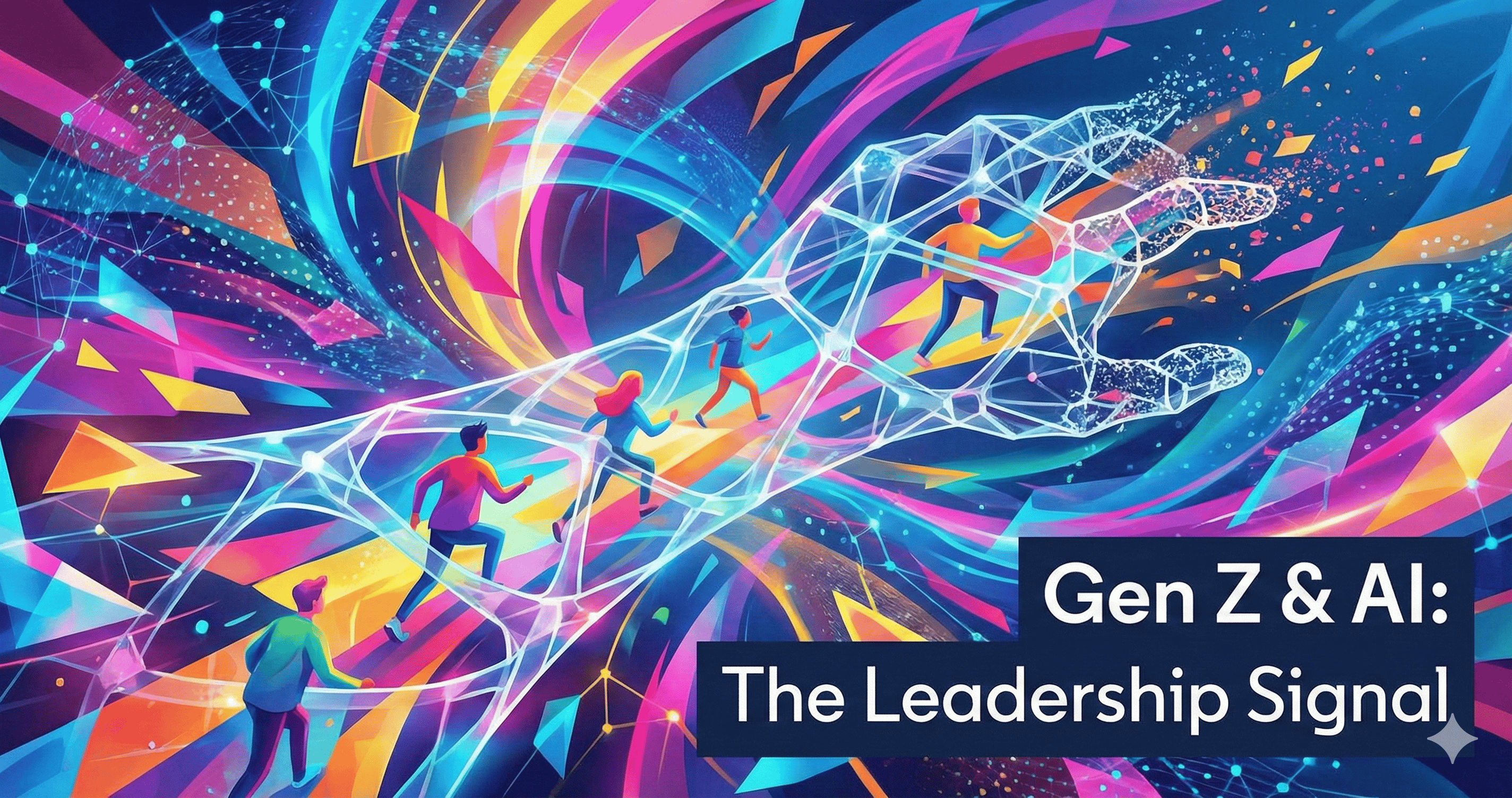
The headline was predictable: Gen Z (people born between 1997 and 2012) are the most anxious generation about AI's impact on their jobs. Baby Boomers, meanwhile, are the most confident about adapting.
You can imagine the takes that followed. Digital natives scared of technology. Older workers with nothing to lose feeling relaxed. The usual generational framing.
But when I read what people were actually saying, a different pattern emerged.
The anxiety is organisational, not generational
Gen Z isn't resisting AI. They're responding to unclear systems and unpredictable career paths created by leaders who haven't caught up.
Consider the numbers: 95% of employers predict growth. 51% of employees share that optimism. That's a 44% gap. Not a technology problem. A trust problem.
When people don't know what good performance looks like next year, when career paths dissolve into vague promises about 'agility', when AI is deployed without explaining how it will actually affect their work, anxiety is the rational response.
And here's the uncomfortable bit for senior leaders: trust in the C-suite has dipped, but bonds between people and their direct managers have strengthened. 72% report strong connections with their manager, up 8%.
AI scales leadership behaviour whether that is strong or weak
Here's what most conversations about AI and the workforce miss: AI is an accelerant, not a replacement. It amplifies whatever leadership behaviour already exists.
When leadership standards are explicit (when people know how decisions are made, who owns them, and what good judgement looks like) AI compounds that clarity. Teams move faster with confidence. Accountability stays clean.
When leadership standards are implied or absent, AI scales the confusion. Decisions happen faster, but no one knows who owns them. Tools provide answers, but judgement disappears. Speed increases while trust erodes.
Gen Z is watching this play out in real time. They're not afraid of the technology. They're afraid of working in systems where accountability has become unclear and leadership has quietly hollowed out.
The ladder is gone. They know it.
72% of employers now believe traditional career routes are outdated. 38% of workers want non-linear pathways. One in five workers believe AI will have limited impact on their actual tasks.
Gen Z has already adjusted their expectations. They're thinking in terms of portfolio careers, cross-functional impact,AI as a partner rather than a threat.
What they're not seeing is leaders who've adjusted theirs.
Entry-level roles still look like dead ends. Training is unevenly distributed. AI adoption happens without transparency about how it changes the work, the expectations, or the path forward.
When commenters talk about the 'Great Workforce Adaptation', they're describing a standoff. Growth only gets unlocked when businesses and talent align. Right now, they're not aligned. They're just moving fast in different directions.
Leadership judgement becomes the signal
AI can surface assumptions. It can stress-test reasoning. It can explore alternatives and second-order effects. Used well, it makes leaders sharper — not by replacing their thinking, but by challenging it.
But that only works when leaders are clear about what they're accountable for. When decision ownership is explicit before the analysis begins, not negotiated after outcomes are known. When judgement standards are shared, not assumed.
The organisations getting this right aren't just deploying AI. They're making leadership expectations visible. They're showing how decisions are owned, how AI informs without replacing accountability, and how people can grow within that system.
The scepticism out there is real. People have watched enough 'transformation' programmes benefit shareholders without touching their day-to-day. Promises that AI will 'empower' workers land hollow when there's no proof attached.
What cuts through is leaders who can explain their judgement without hiding behind tools. Who use AI to think more clearly, not to avoid thinking altogether. Who make accountability explicit rather than letting it drift.
The real question
AI isn't going to wait while organisations figure out their people strategy. Job postings for 'AI agent' roles surged 1,587% last year. The market is already shifting.
The leaders who use AI to strengthen their judgement — and make that judgement visible to their teams — will find their people adapting faster than expected. The ones who treat it as a technology rollout will keep wondering why anxiety persists even as adoption increases.
That question isn't generational. It's universal.
And the answer will determine whether AI amplifies leadership clarity or exposes its absence.
Sources
Randstad Workmonitor 2026
LinkedIn News: Young Workers Voice AI Concerns