
Martin Wheatley
Founder, The AI Leader Lab · CIMA Qualified · Managing Director, Rawson Ellis
Something happened recently that I want to share, because it's a good example of what AI looks like when it's actually useful for leaders. Not in a "look at this shiny tool" way. In a "this solved a real problem in 30 minutes" way.
The situation
I was working with a leader who needed to give targeted performance feedback to a relatively new member of their team. The standards weren't being met, it had been noticed by others, and it needed addressing.
Not unusual. Most leaders face this regularly.
The challenge wasn't the content of the feedback. The leader knew exactly what needed to be said. The challenge was how to say it. They hadn't given a lot of this kind of feedback before. They were nervous about demoralising someone who was already struggling. They wanted to be constructive, not crushing.
Sound familiar?
What we did
We sat down and built a custom AI project. Took about 30 minutes to set up from scratch.
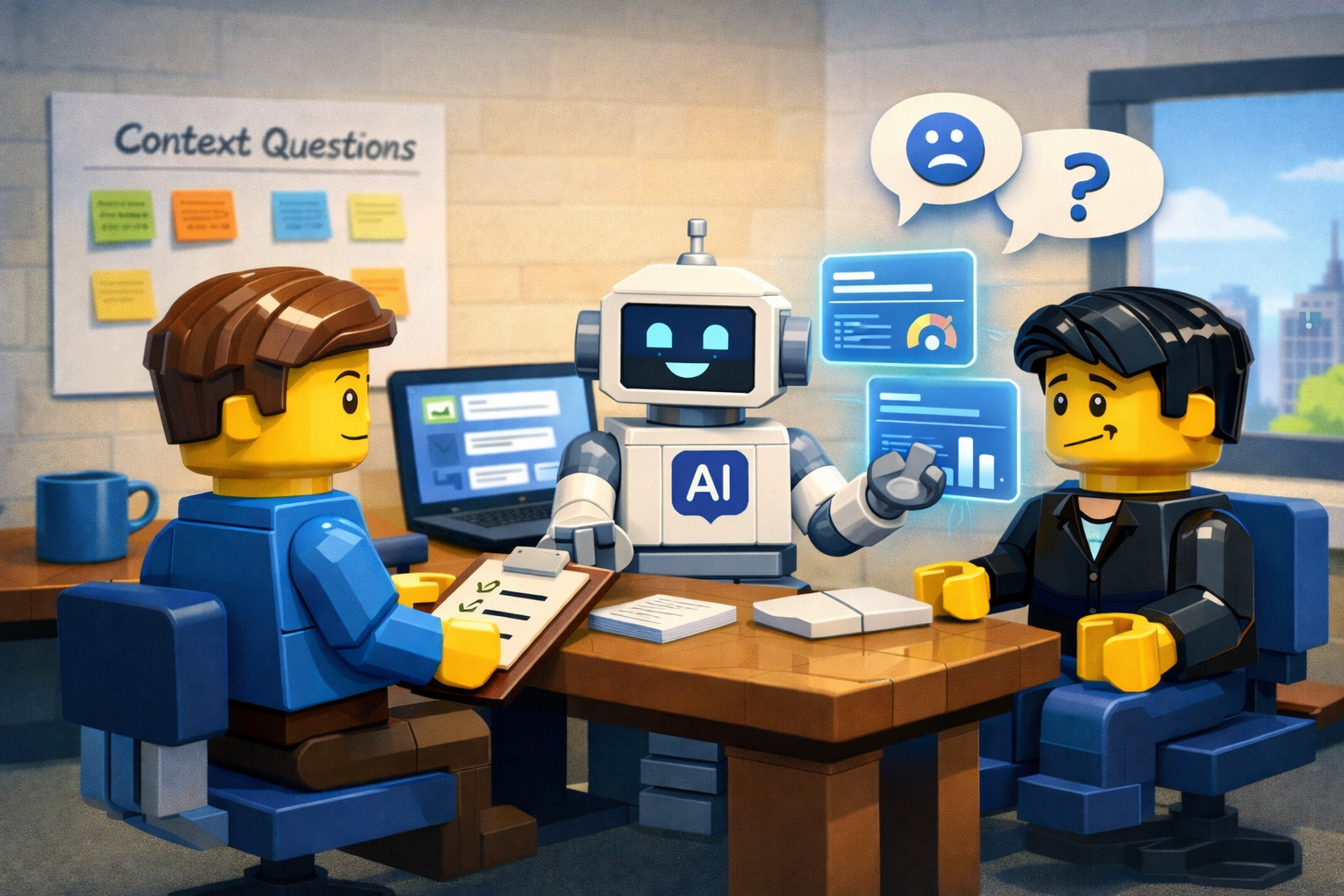
The key design decision was this: we made the AI ask for context before it did anything useful. Not jump straight into role-playing, but first understand the situation.
It asked about the person receiving the feedback, their experience level, how they typically respond to challenges, whether this had been raised before, where the gap sat relative to the team, and how confident the leader felt about having the conversation. And why.
Only then did it start playing the role of the team member, responding realistically based on everything it had been given.
Why it worked
The leader could try different approaches. More direct. Softer. More structured. Each time, they could see how the conversation might play out and adjust accordingly.
They could stop mid-flow, rethink an opening line, and try again. No embarrassment. No audience. No facilitator pressing pause to "debrief the dynamics."
Compare that to a traditional training course role play: eight people watching, one facilitator, a made-up scenario that never quite matches reality, and the nagging feeling that everyone is silently critiquing your delivery.
In 30 minutes of private rehearsal, this leader went from nervous avoidance to clear, confident preparation. They'd said the hard parts out loud. They'd adjusted their approach based on how different framings landed. They'd built muscle memory for a conversation they'd been putting off.
The outcome
The feedback conversation happened the next day. It went well. Professional, constructive, well-received. The team member left with a clear understanding of where they needed to focus and a specific plan for the coming weeks.
It wasn't a formal process or a written warning. It was exactly what it should have been: an early, honest, well-handled conversation that gave someone a chance to improve.
The broader point
This is the kind of AI use case that won't trend on LinkedIn. Nobody's going to post a viral thread about "I built a feedback rehearsal tool."
But it matters. A lot.
Because the gap between knowing you need to give feedback and actually giving it well is where most leaders get stuck. The intention is there. The confidence isn't.
Two things to take from this:
First, context beats prompting. We spent more time helping the model understand the situation than we did writing the instruction. That's where the value sits. A well-written prompt with no context gives you a well-written but generic answer. Rich context with a simple prompt gives you something you can actually use.
Second, the safe rehearsal space might be AI's most underrated application for leaders. Not generating content. Not summarising documents. Helping people practise the human skills that AI can't replace, in a space where getting it wrong costs nothing.
If you're a leader sitting on a conversation you know you need to have, you might not need more confidence. You might just need a place to rehearse.